
10 October 2026
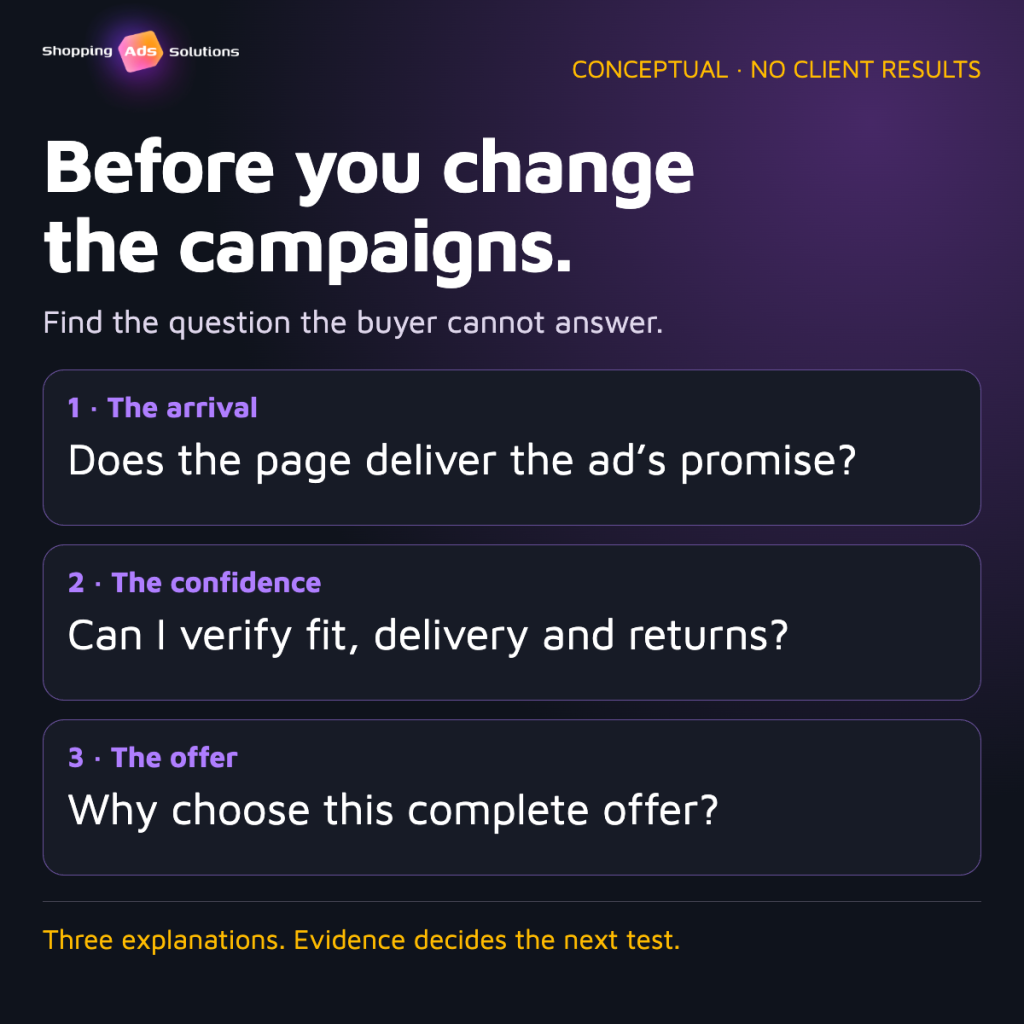
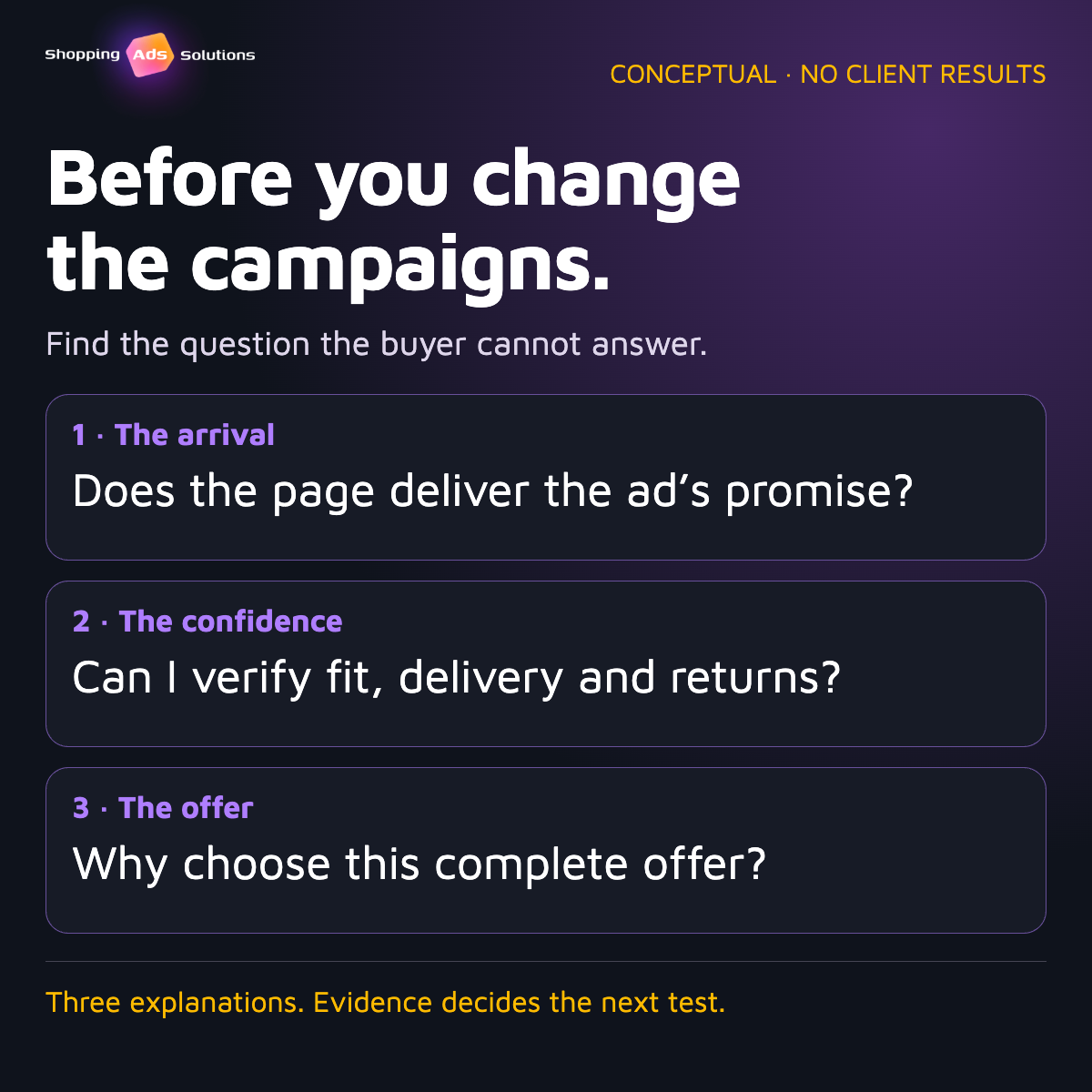
Before deciding whether to fix the ads, redesign the website or change the offer, follow one buying decision. Ask what brought the shopper, what they needed to feel confident buying, and whether the complete offer deserved their choice. Fewer purchases are a reason to investigate; they do not identify the cause.
Start with the purchase you expected
For an established eCommerce business, a decline in purchases can quickly become a campaign discussion. The owner wants a recovery plan; the marketing team is asked what to change. Before committing budget or a redesign, make the question smaller: which product journey are we trying to understand?
Choose a relevant product and follow the route from its advertisement to the landing page, product details, cart and checkout. Keep the selling market and device clear. A journey reviewed on a large desktop screen may not represent the mobile purchase you are investigating.
This gives the discussion a concrete subject. It does not prove why people leave, but it lets the team compare explanations against the same journey.
Did the arrival match the promise?
Imagine a hypothetical merchant advertising an in-stock product with free returns. On the mobile product page, delivery timing and return conditions are difficult to find. This is an illustration, not a SAS client case.
The first explanation concerns the promise that brought the shopper. Does the destination show the advertised product and support the advertised terms? Can the business actually deliver those terms? An appealing message and a commercially accurate message need to be the same message.
Review the advertisement beside its destination and the merchant’s actual policy. A mismatch would justify investigating the arrival promise. If they agree, that explanation becomes less persuasive for this particular journey. It does not establish that the campaign as a whole is working.
Can the shopper resolve the risk of buying?
In the hypothetical example, the product and advertised promise may be accurate while important answers remain hard to find. The next question is whether the site helps a shopper decide with confidence.
When should the product arrive? What does returning it involve? Are the conditions clear before payment? These questions concern the purchase, not just the appearance of the page. A website can look polished while leaving them unresolved.
Review how those answers appear on mobile. Where permitted evidence exists, compare that review with customer questions and relevant journey data. A missing answer is a plausible source of friction, not proof that it caused lost orders. Making the information clearer would test a different explanation from replacing the advertisement.
Our published first-purchase trust review — diagnosis, not a verified CRO result
Is the complete offer worth choosing?
Clear information can reveal a deeper issue: the terms themselves may be uncompetitive for the buying situation. If the delivery promise does not suit the purchase, displaying it more prominently does not change that promise.
At SAS, we consider the complete offer: product, price, shipping, delivery reliability, returns and service. Which elements matter to this merchant’s customers remains an evidence question. A founder’s preferred advantage is a starting hypothesis, not a substitute for customer understanding.
Changing the offer also needs a commercial owner. A more generous return policy or different shipping terms must be assessed against operating costs and what the business can reliably fulfil. The question is whether a stronger reason to buy can also be a sustainable promise.
Choose a test that answers one explanation
The distinction matters because each explanation calls for a different change. A misleading arrival promise calls for alignment. Information that is difficult to find calls for a clearer purchase journey. Weak terms call for a commercial decision.
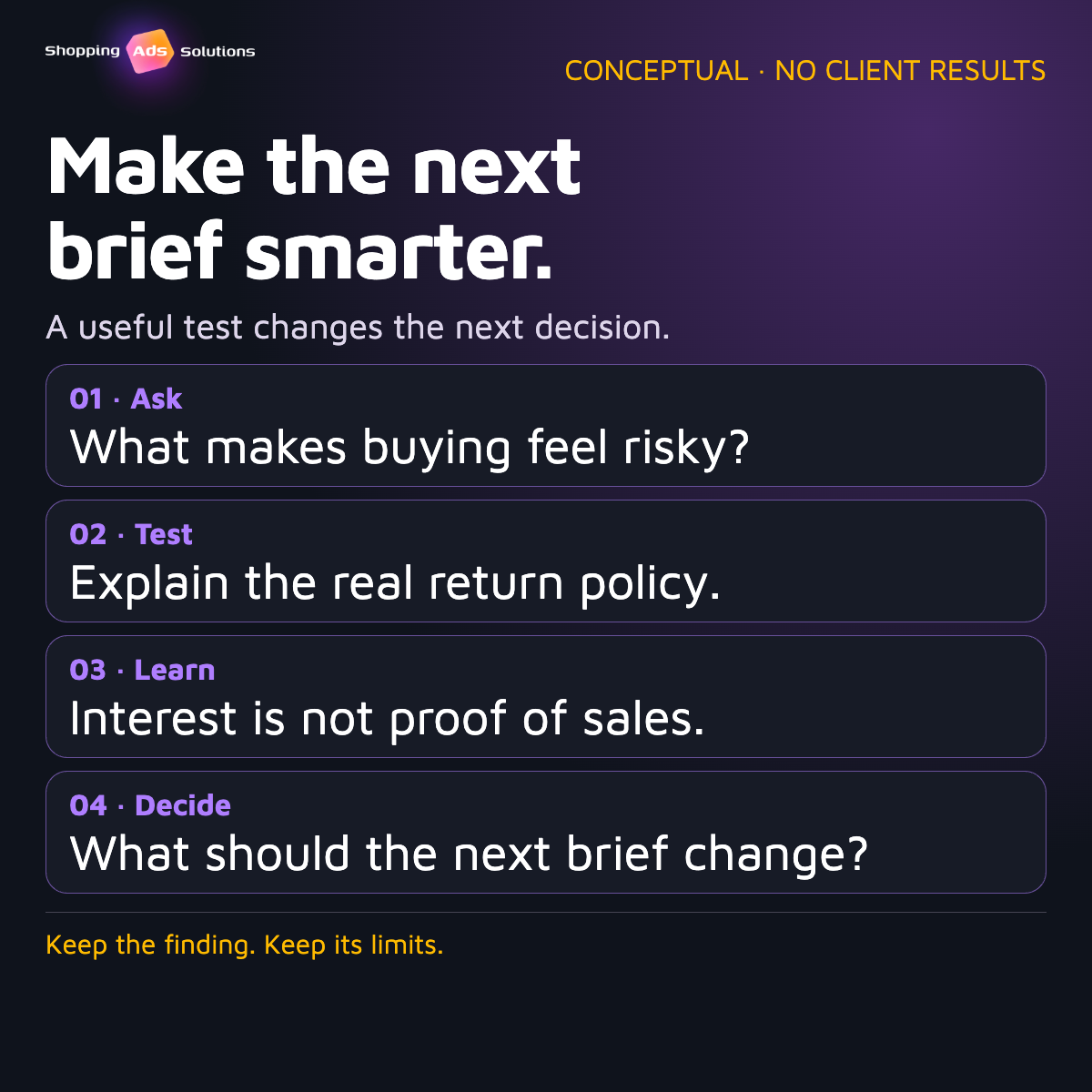
State the hypothesis before changing anything. For our hypothetical merchant, it might be that delivery and return information is difficult to find on mobile. Decide what change would test that explanation, what evidence is available and what observation would challenge it.
Agree on an observation period and record other material changes. Purchase counts, customer questions and journey signals can inform the review, but small samples or simultaneous changes may leave the result inconclusive. Record that uncertainty rather than declaring a winner.
Bring a buying decision to the growth discussion
Our recommendation is to begin with one product journey and one specific explanation worth investigating. That creates a more useful conversation than asking whether the entire account or website is the problem.
We are developing SAS Labs alongside this work. Its development is a reason to keep the questions and findings clear, not a claim that a finished tool already diagnoses the store. For a discussion with Shopping Ads Solutions, bring the advertisement, its destination, the actual commercial terms and the evidence you already have. The next decision is where a change can answer a real question about the purchase.
Discuss one product journey with SAS