
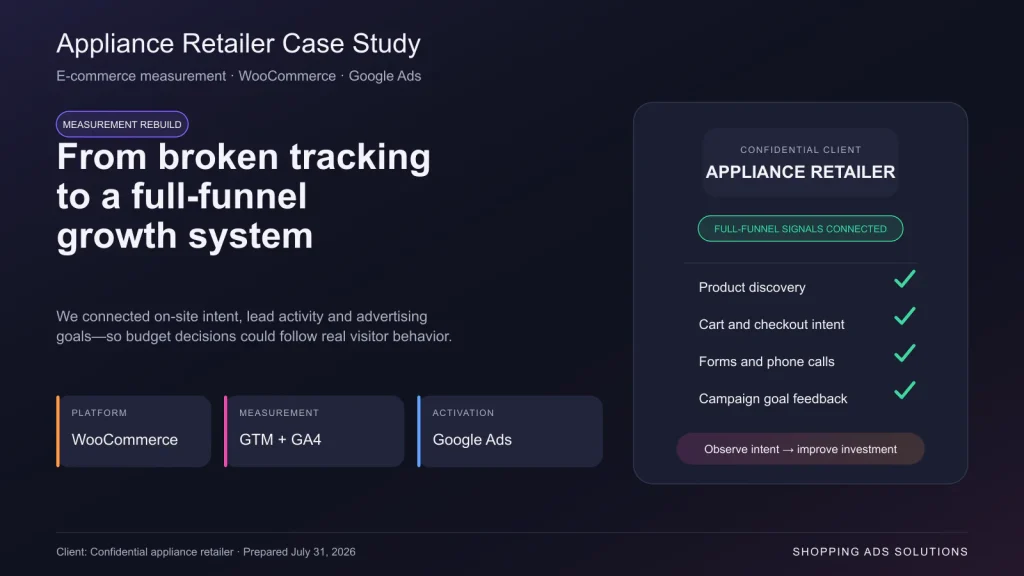
The measured result was a repaired signal path—not a claimed revenue lift. A multi-location appliance retailer can now follow visitors from product discovery to higher-intent actions, connect calls and forms to their source, and make advertising decisions using evidence from the journey rather than traffic volume alone.
The retailer had been paying for traffic without a dependable view of what visitors did next. We rebuilt the measurement path across its WordPress and WooCommerce store so product behavior, leads and advertising outcomes could work as one system.
Evidence note — updated August 6, 2026: This anonymized case uses implementation records, Google Ads and CallRail screenshots, and an early QA sample supplied or reviewed by Shopping Ads Solutions in July 2026. The public evidence includes 164 add-to-cart actions, 17 checkout starts, 213 form submissions, 12 of 13 raw leads attributed to Google Ads in an early CallRail snapshot, and two valid Google leads that retained attribution through invoice creation after test and invalid records were removed. The client identity and sensitive fields remain withheld. These figures verify signal coverage and attribution; they do not prove a revenue, ROAS, or lead-quality lift. Complete invoice-value feedback still depends on continued CRM use.
At a glance
| Before | After | |
|---|---|---|
| Website behavior | Important WooCommerce actions were incomplete or disconnected | Product, cart and checkout events flow through GTM and GA4 |
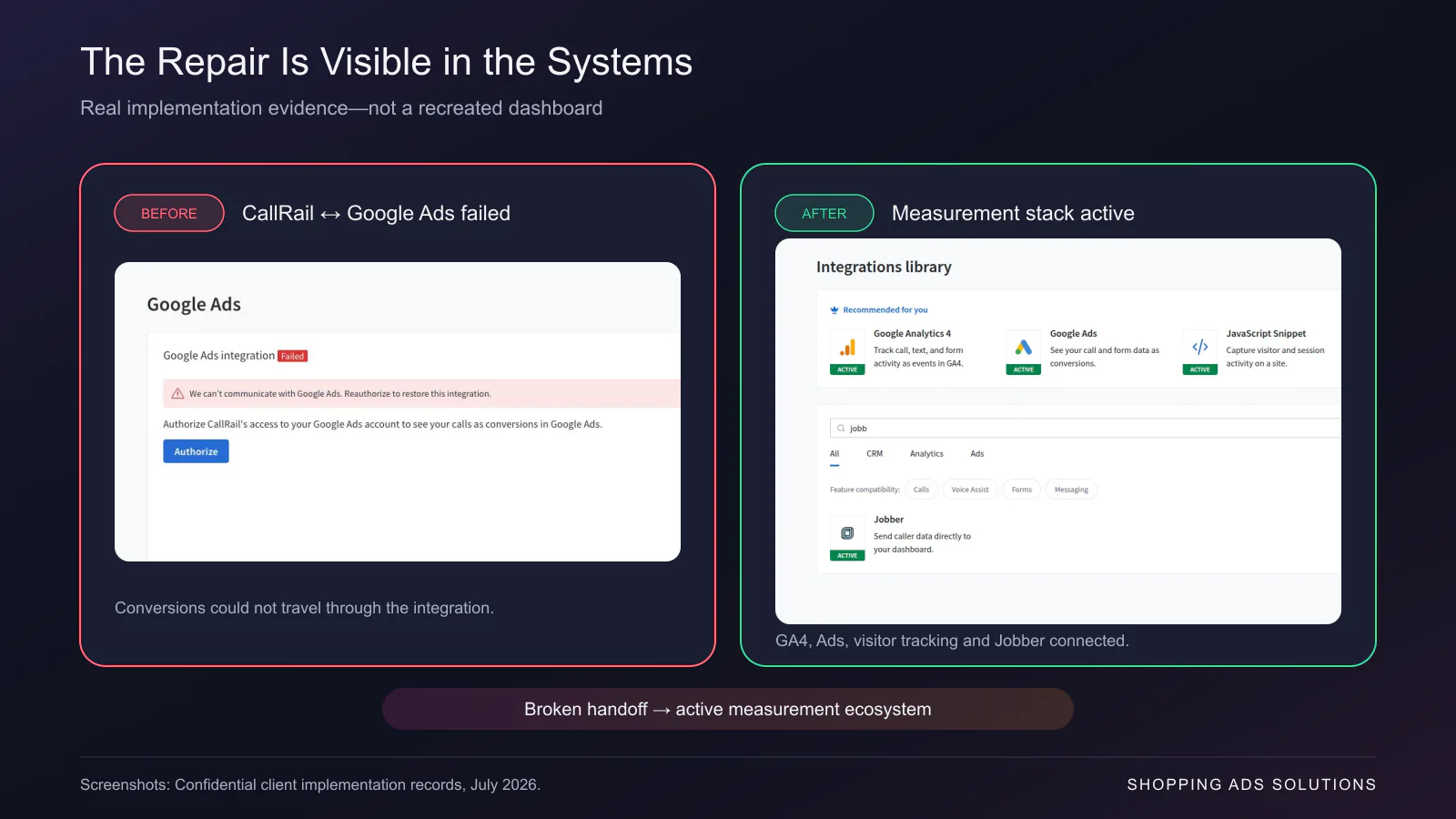
| Lead attribution | Google Ads integration failed and call tracking warned that leads might not track correctly | GA4, Google Ads, visitor tracking and Jobber integrations are active |
| Google Ads learning | Campaigns received an incomplete picture of visitor quality | Relevant purchase, form and call goal families are applied across enabled campaigns |
| Remarketing | Visitors could not be reliably separated by on-site intent | Audiences can be organized by product, cart, checkout and lead behavior |
| Budget decisions | Traffic could be judged too heavily by clicks | Investment can follow traffic that demonstrates meaningful progression |
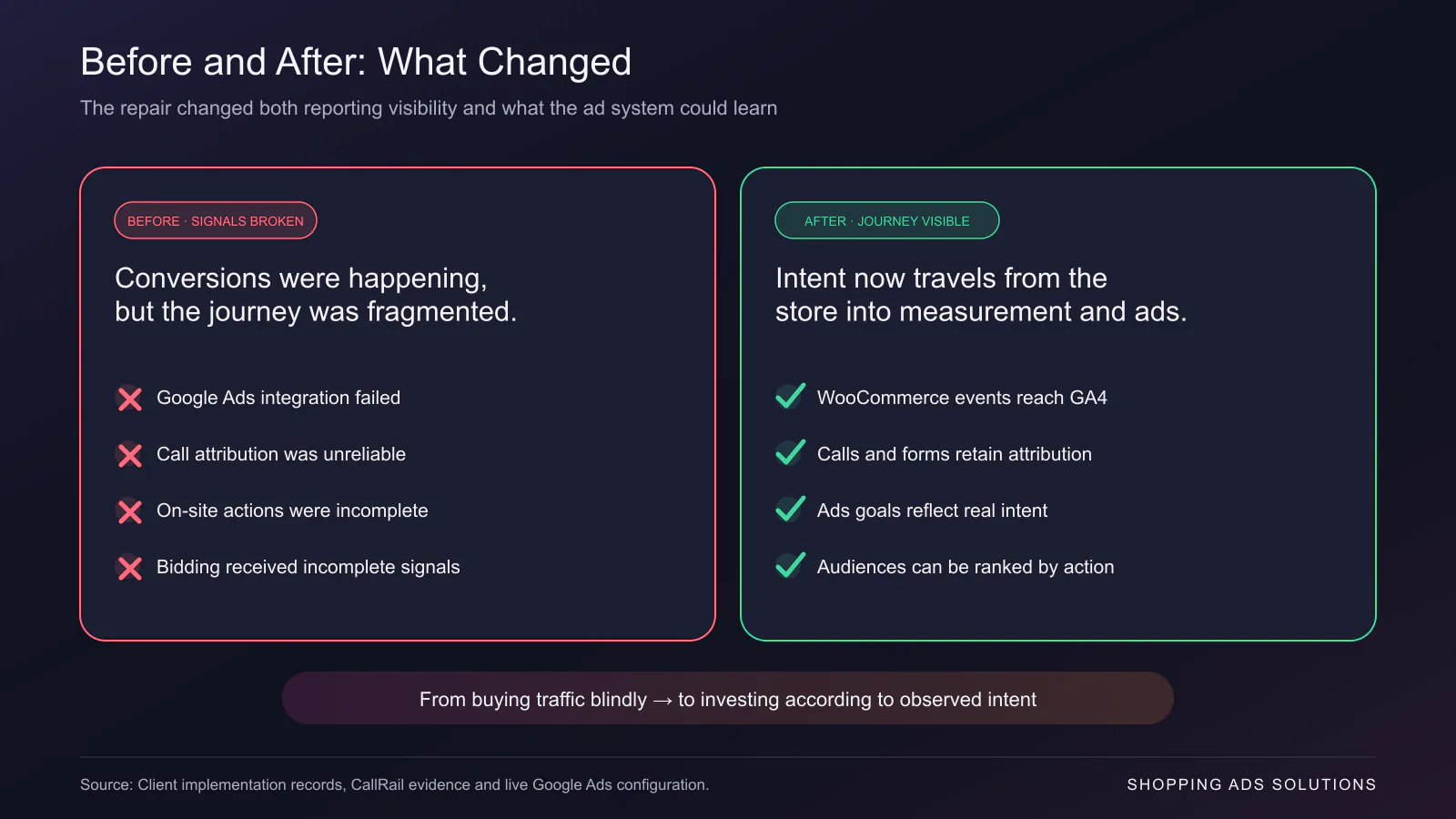
Before: conversions were happening, but the journey was broken
The original setup did not provide a trustworthy end-to-end view. The CallRail connection to Google Ads was visibly failing. The platform reported that it could not communicate with Google Ads and needed to be reauthorized.
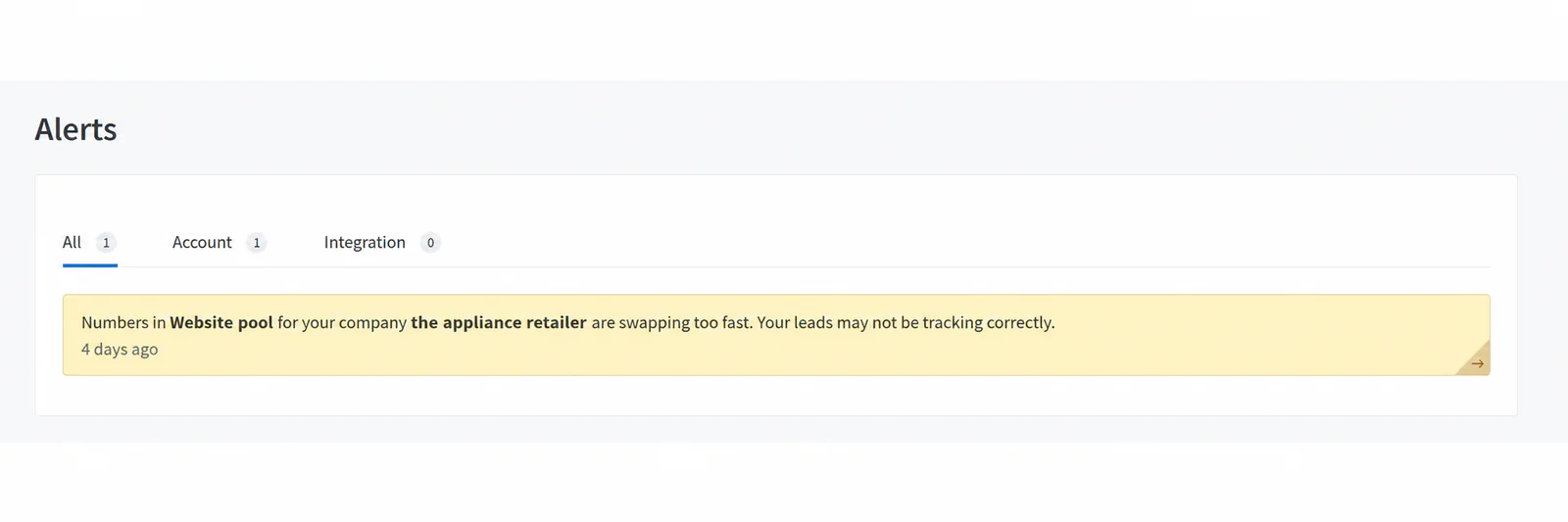
A separate alert warned that the numbers in the retailer’s website pool were swapping too quickly and that leads might not be tracked correctly.
This created four business problems:
- The visitor journey was incomplete. The retailer could not consistently connect product discovery, cart behavior, checkout intent, forms and calls.
- Remarketing audiences lacked dependable behavioral depth. A product viewer, cart starter and real lead could look too similar inside the advertising workflow.
- Google Ads lacked useful learning signals. Automated bidding cannot favor valuable behavior if that behavior never reaches the platform correctly.
- Low-quality traffic was harder to identify. Clicks that never progressed could consume budget without being clearly separated from visitors showing commercial intent.
The objective
The objective was to create the strongest practical end-to-end tracking coverage across the retailer’s buying journey and apply the relevant outcomes to Google Ads.
- Understand what each visitor did on the WooCommerce site.
- Separate curiosity, commercial intent and real leads.
- Return useful signals to Google Ads so campaigns, audiences and budgets could be managed with better information.
The end-to-end workflow we built
1. WooCommerce event tracking in GTM and GA4
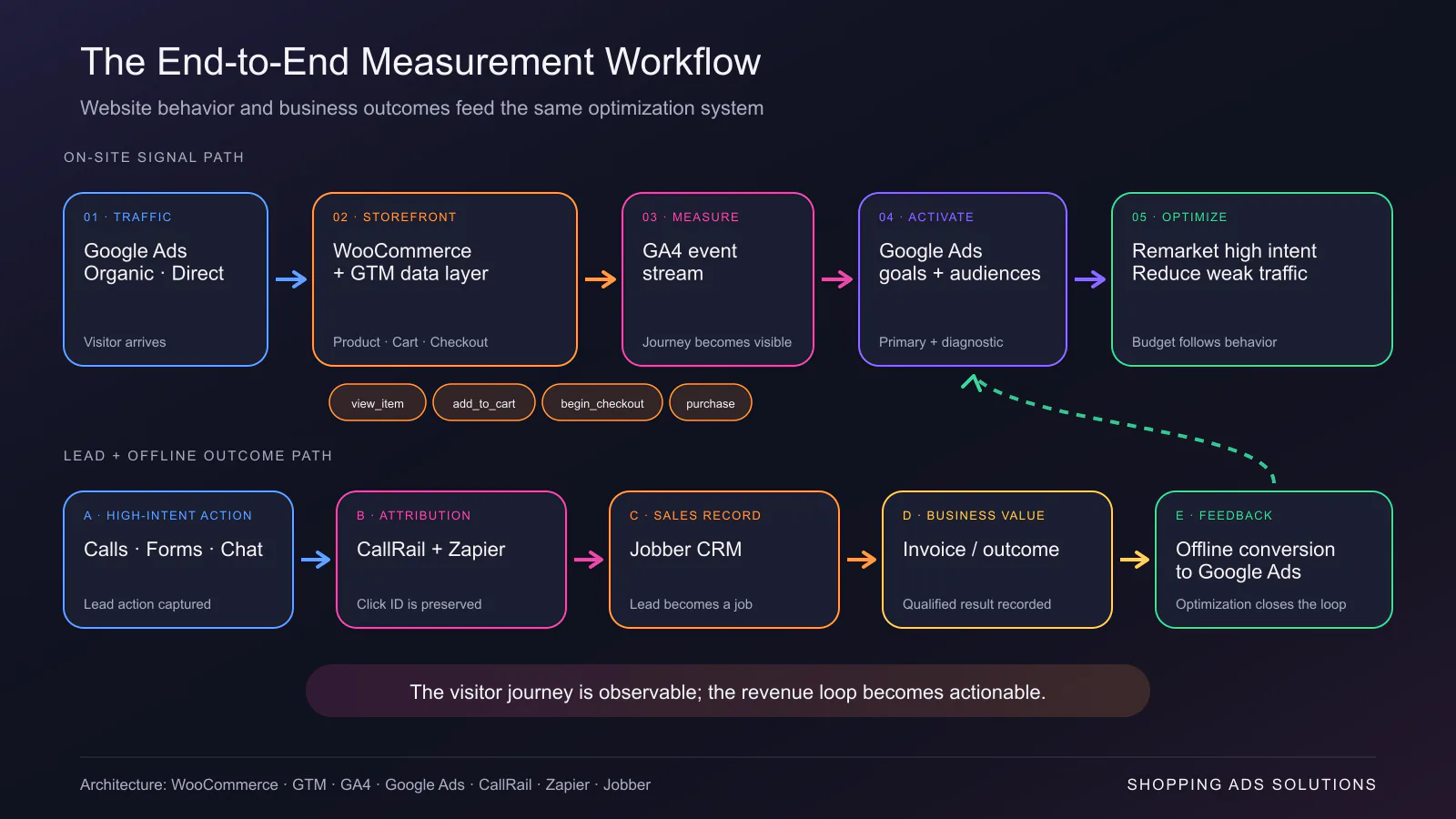
We mapped the e-commerce journey around meaningful visitor actions rather than page views alone. The event structure includes view_item_list, view_item, add_to_cart, remove_from_cart, begin_checkout, add_shipping_info, add_payment_info and purchase. These follow Google Analytics’ documented recommended e-commerce measurement model, checked August 6, 2026.
These events distinguish a visitor who browsed a category from one who added a product to the cart or entered checkout. Lead signals—including form submissions, website calls and calls from ads—sit alongside that e-commerce journey.
2. Google Ads goals organized around intent
Not every tracked action should be treated as an equal bidding target. We organized the account so high-value outcomes can function as primary optimization goals while supporting e-commerce events remain visible as diagnostic signals. Google Ads supports separate conversion actions for purchases, calls and other outcomes; our operating decision was which of those actions should guide bidding and which should remain diagnostic.
- Primary outcomes tell the advertising system what the business ultimately wants.
- Secondary events show how visitors progress—or fail to progress—before that outcome.
The enabled Search, Performance Max and Shopping campaign types were checked against their campaign-level goals. Relevant purchase, form and phone-lead goal families are applied across those campaigns, with directions included where appropriate.
3. Calls, forms and the offline sales process
For an appliance retailer, the website is not the only place where a sale develops. Prospects call, submit forms, use chat and may complete the commercial process with a staff member.
We connected CallRail, Zapier and Jobber so lead information could travel into the sales workflow while retaining the original advertising identifier:
Paid click → website action or call → attributed lead → Jobber record → invoice or qualified outcome → Google Ads feedback
Duration-qualified call actions were also used so that every accidental or extremely short call would not automatically be treated as an equal business outcome.
4. Validation across the real journey
An “active” label is useful, but it is not sufficient proof. We checked the actual handoffs between the click identifier, website action, form or call, lead record and advertising conversion. Test records, duplicates, non-Google leads and records without an invoice were separated from genuine paid outcomes during validation.
An early QA sample confirmed that two genuine Google leads became invoices and retained the correct attribution after invalid records were removed. This was a validation result—not a performance claim.
After: the visitor journey became visible and usable
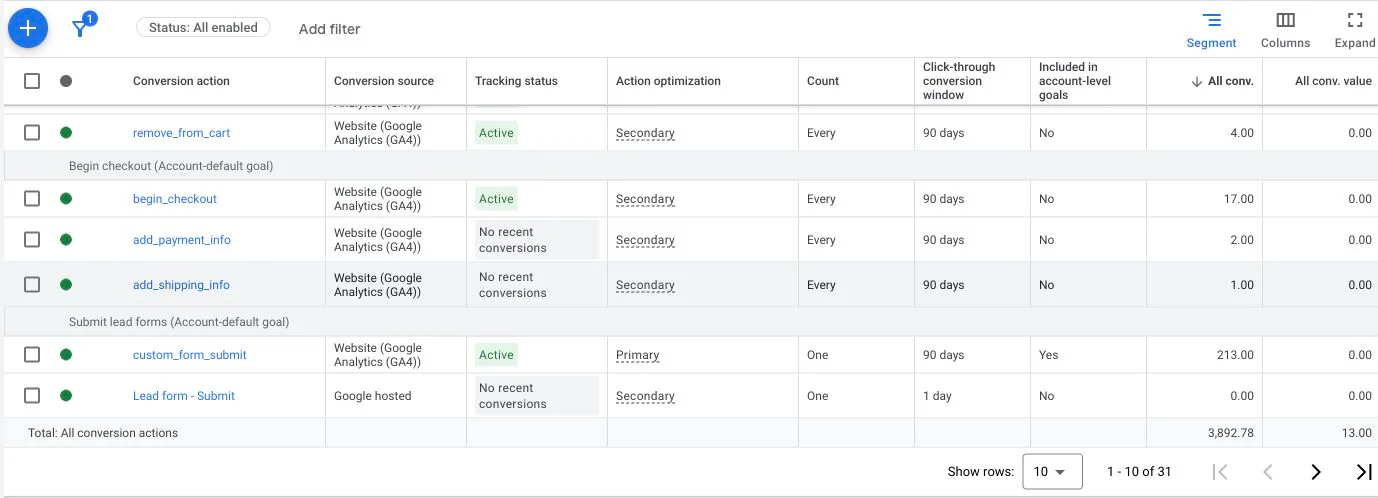
The repaired setup now records meaningful activity inside the retailer’s Google Ads account. In the July 2026 account snapshot:
add_to_cartwas active and recorded 164 actions.begin_checkoutwas active and recorded 17 actions.custom_form_submitwas active as a primary action and recorded 213 actions.- Supporting checkout events, including payment and shipping information, were present in the same architecture.

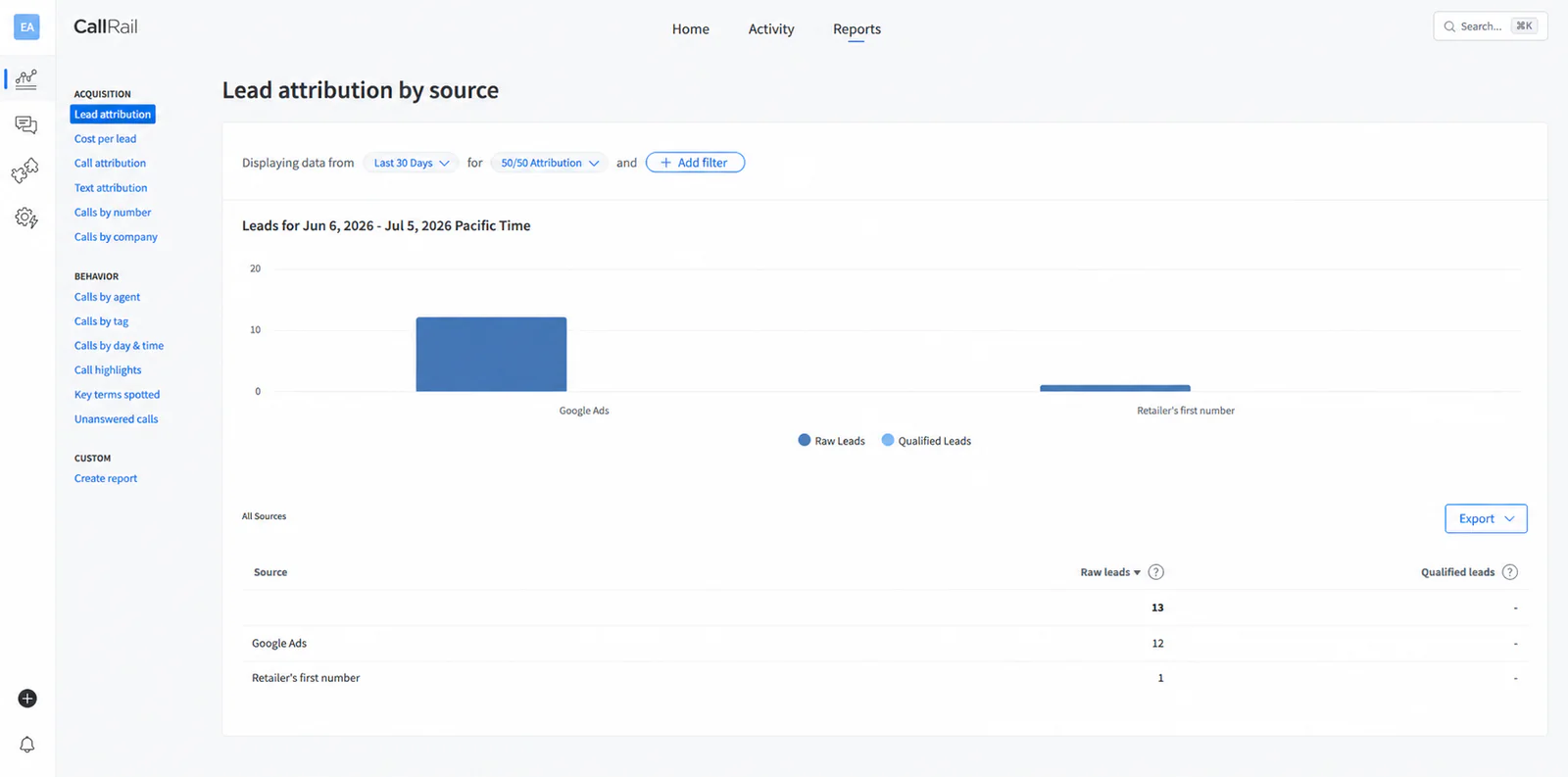
Call attribution also became visible. In an early post-integration CallRail snapshot, 12 of 13 raw leads were attributed to Google Ads.
What this changes for marketing decisions
The value of the rebuild is not the number of events in a dashboard. It is the ability to act on the differences between visitors.
The retailer can now develop audiences such as:
- Product viewers who did not add to cart.
- Cart starters who did not begin checkout.
- Checkout visitors who did not purchase or submit a lead.
- Visitors who submitted a form or completed a qualified call.
- Existing leads who should be excluded from cold-prospecting messages.
This makes it possible to remarket more deliberately, compare traffic sources by funnel progression, increase investment where visitors consistently move toward a lead or sale, and reduce investment where clicks repeatedly fail to produce meaningful actions.
Our operating principle became: invest more in audiences and traffic that demonstrate valuable behavior, and spend less where traffic repeatedly fails to progress.
The completed measurement system
WordPress + WooCommerce → Google Tag Manager → Google Analytics 4 → Google Ads → CallRail → Zapier → Jobber
The core online funnel, form and call-attribution paths are working and visible. Complete invoice-value feedback still depends on the retailer’s team continuing to work from the automatically created Jobber records and completing the relevant invoices. Tracking creates the evidence; the operating process keeps that evidence complete.
Outcome
The appliance retailer moved from broken, fragmented conversion tracking to a measurement system that can follow the customer journey across the website and into lead handling.
The business can now see which traffic merely arrives, which visitors show intent, which prospects become leads and which actions deserve more advertising investment.
Is your measurement path hiding valuable customers?
If your website generates sales, forms or phone calls but Google Ads cannot reliably connect those outcomes to the traffic that produced them, the first problem may not be the campaign. It may be the measurement path.
For a related measurement diagnosis, read what we found when CallRail recorded calls but Google Ads showed zero imported conversions. Our broader data and analytics work connects advertising signals to the business outcomes they are meant to represent.
Request a paid end-to-end measurement and growth audit. If we subsequently work together, the audit fee is credited toward the agreed contract.
About the author: Michael Chachashvili is a founder of Shopping Ads Solutions and works on paid acquisition, measurement, and profitable growth systems for eCommerce and service businesses. Published July 31, 2026; updated August 6, 2026.