
11 October 2026
A remodeling campaign can generate leads and still fail the business. A form submission is the beginning of a commercial process, not evidence of profitable work.
Start with the work the business wants
At Shopping Ads Solutions, we connect advertising decisions to what happens after the inquiry: whether the project fits, the conversation progresses, the estimate takes place, the contract is signed, and the completed work makes economic sense.
That does not mean waiting until every project finishes before making a decision. It means knowing what each earlier signal can and cannot tell us.
Before asking for more leads, we want a clear picture of the jobs the company is equipped to win and deliver.
Which services matter? Which locations can the team serve efficiently? What project scope fits the operation? When can work realistically begin? What would make an otherwise attractive job financially unsuitable?
These are not details to leave for the sales team to discover after the advertising budget is spent. They shape the offer, the message, the qualification process, and the decision to expand.
A homeowner may have a genuine need and still be the wrong fit for a particular contractor. An unsuitable service area, a different type of project, or incompatible timing is a specific reason to learn from, not a verdict on the person.
Use milestones that mean something
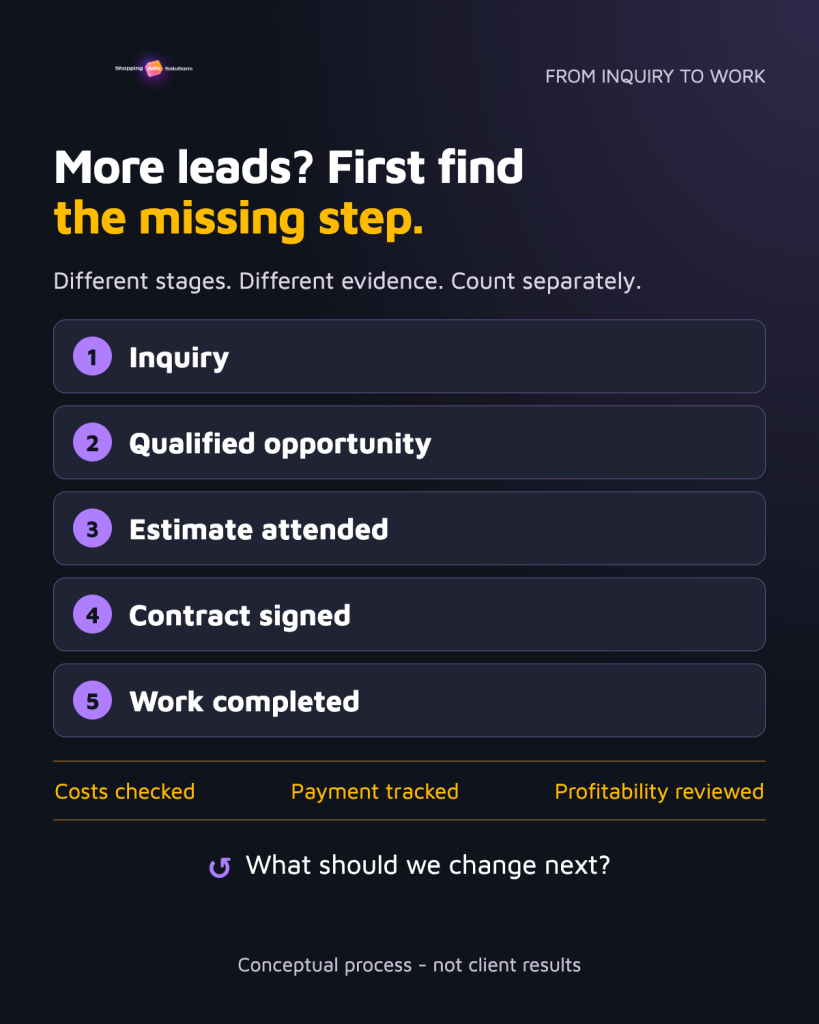
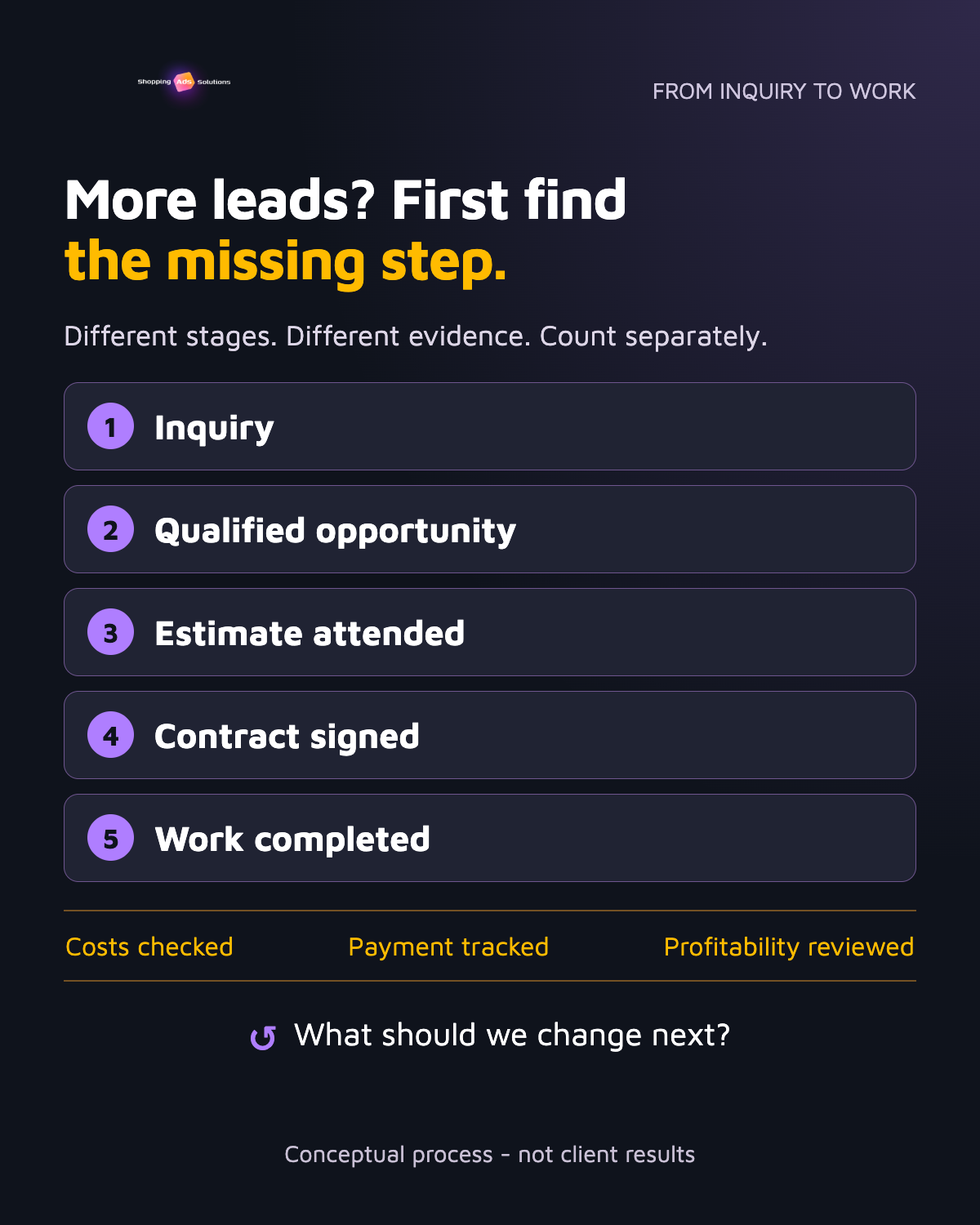
We separate the journey into distinct commercial stages:
Inquiry: a person has contacted the business.
Qualified opportunity: the available information supports a plausible fit between the project and what the business can provide.
Attended estimate: the planned assessment or estimate conversation actually happened, rather than merely being booked.
Signed contract: the customer has committed to an agreed scope.
Completed work: delivery has finished, with costs and payment status checked separately.
The definitions belong to the business. Qualification should reflect its real service, project, timing, and commercial criteria, rather than whichever label makes the advertising report look strongest.
A signed contract is not collected revenue. Revenue is not profit. Completed work still needs a review of actual costs, payment, and any unresolved obligations.
Diagnose the missing step before blaming the leads
A contact record without a sale can represent very different situations.
Perhaps the person is outside the service area. Perhaps nobody has reached them yet. Perhaps the estimate never happened. Perhaps the proposed start date was impossible. Perhaps the offer lost to an alternative.
Those explanations point to different decisions.
Service-area mismatches may call for reviewing the acquisition message and targeting. Unanswered inquiries call for examining contact attempts and ownership. Attended estimates without agreements call for examining fit, the offer, and the sales conversation. Suitable projects declined because the schedule is full point to capacity.
We do not classify an uncontacted inquiry as a bad lead. Its quality is still unknown. Contactability, intent, sales handling, and delivery capacity should not disappear inside one rejection label.
Give every lead time to become an outcome
For reporting, we group inquiries by when they arrived and follow those same groups through the stages. This is a cohort view: the original inquiries remain connected to their later outcomes.
We do not divide contracts signed this month by inquiries received this month and assume they describe the same people. Some contracts may come from earlier inquiries; newer inquiries may still be progressing.
Compare groups with similar time to progress, while noting differences in project type, service area, capacity, and follow-up. Keep pending opportunities visible instead of treating them as losses or assuming they will close.
Early signals help decide what to investigate now. Mature outcomes help judge whether the acquisition approach deserves more investment. Neither replaces the other.
Connect the feedback to advertising
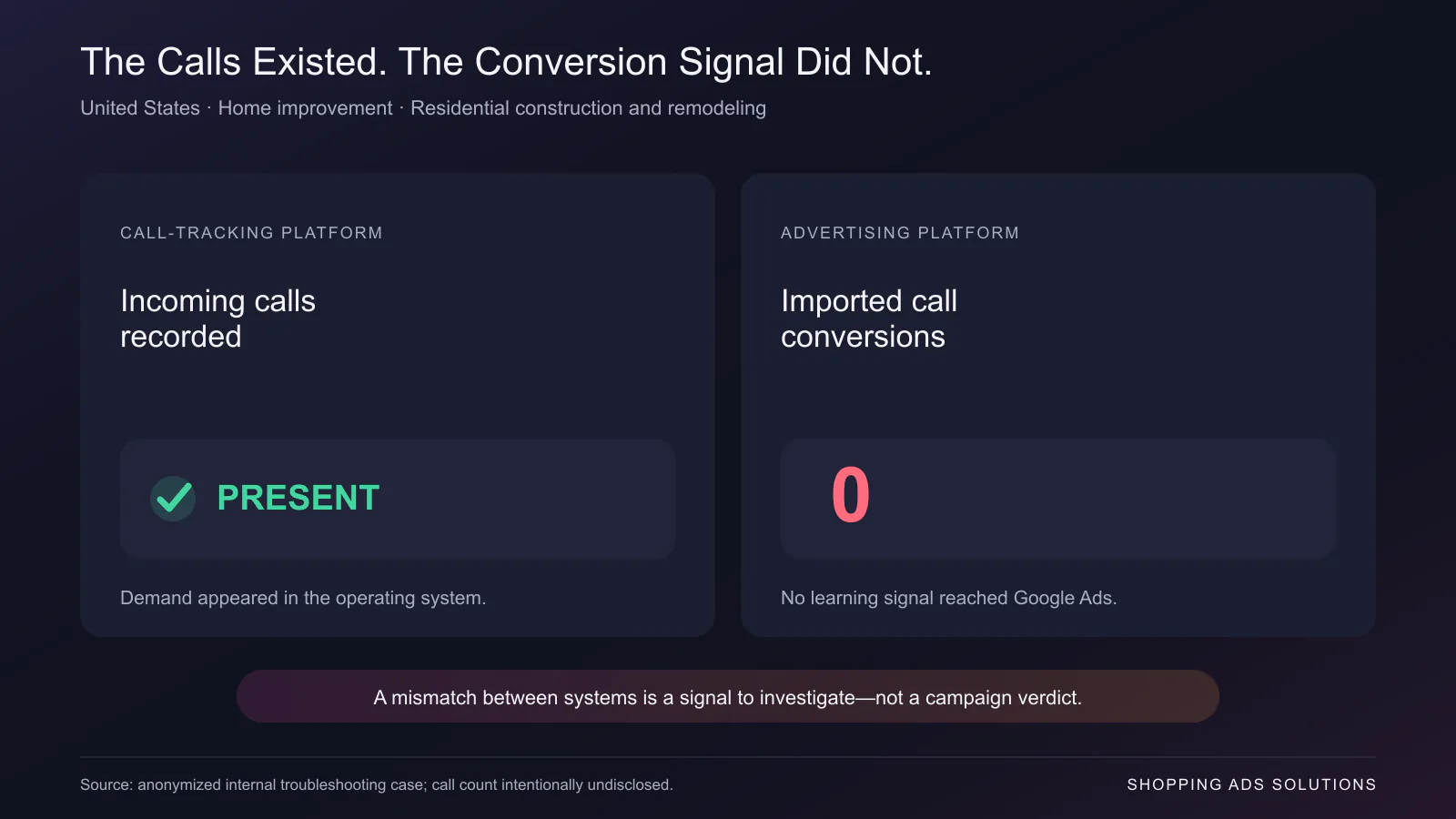
Google Ads distinguishes leads qualified outside the platform in a CRM or internal system from converted leads that complete a business-defined milestone. Its offline-conversion tools can associate later outcomes with earlier ad clicks or calls.
Our job is to make those distinctions useful, not simply install another conversion label. We agree on the meaning of each stage, check whether the records support it, and examine which signals are suitable for advertising decisions.
Connecting systems does not repair inconsistent qualification, missing updates, or a weak sales process. Nor does attribution establish that every recorded contract was caused by advertising.
Our conversion tracking and attribution work connects business milestones to the evidence used in marketing decisions.
Judge the work, not just the contract value
Before increasing acquisition spend, we want the financial view beside the sales view.
Consider the cost of acquiring and selling the job alongside labor, materials, subcontracting, and other relevant delivery costs. Use a consistent definition of job contribution and keep it separate from company-wide net profit. Track collection timing separately from the signed amount.
A larger contract may absorb more crew time or require more cash before payment. A smaller project may fit the operation better. These are possibilities to assess from the business's records, not assumptions about which job is preferable.
The next decision should be specific
The useful conclusion is not automatically “buy more leads” or “change the agency.”
It might be to clarify the offer, repair the handoff, concentrate on a service the team can deliver, or test additional spend once suitable opportunities are progressing and the economics support it.
That is how we connect performance marketing to the business: identify the constraint, assign an owner, change something specific, and review the resulting evidence.
If your remodeling company has inquiries but cannot explain what they become, the next step is to map that journey before paying to make it bigger.
Talk with us about your inquiry-to-work journey